
Do you shower in the morning to really wake up and activate your senses? Or do you prefer a warm shower in the evening? It’s not just the water quality, the showerhead, all the fittings and the overall ambience in the bathroom that influence your perception. The shower tray also plays a decisive role in your showering pleasure.
In the market you can find plenty of different materials and shapes from a very large selection of suppliers, which can be overwhelming at first glance. Therefore, we provide you with an overview about what modern shower trays are made of and what options you have in the market, as well as tips for choosing the right one for your projects.
The variety of materials
Not all shower trays are the same – that’s what everyone who wants to refit their bathroom realizes. The variety of materials ranges from acrylic and ceramic to solid surface, Quaryl, steel and Varicor. Not only do the materials differ visually; they also determine how the surface feels, how much time you have to put into caring for the material, and how robust it is. These are the properties of the specific materials:
Acrylic
Sanitary acrylic is a plastic. It is lightweight and very easy to shape into a variety of forms. Many bathtubs are made of acrylic because the non-slip material feels warm on the skin and is also easy to clean. However, it is less suitable for heavier loads.
Ceramic
A classic in the bathroom is sanitary ceramic, which has also established itself in toilets and washbasins. It is characterized by a long service life and a beautiful shine. Ceramic is robust, resistant to scratches and chemicals. The only disadvantage of the material is its high dead weight, which does not allow its installation in some bathrooms.
Solid surface material
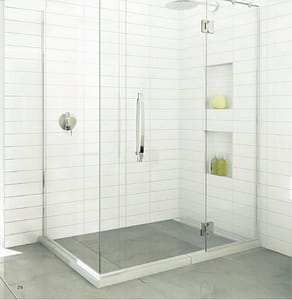
All solid surface materials are either acrylic or polyester bonded. They have a warm and smooth feel. Since there are no joints where bacteria and dirt could accumulate, the material is not particularly demanding in terms of cleaning and maintenance. It is also very durable, long-lasting, environmentally friendly and recyclable.
Quaryl
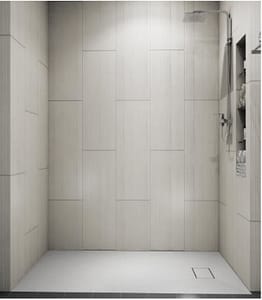
The name Quaryl chosen by Villeroy & Boch refers to a mineral casting made of acrylic and quartz sand. Shower trays made of this material are slip-resistant and very hard-wearing. Cleaning is child’s play, as a cloth with mild detergent is all that is needed. Quaryl also contributes to soundproofing, because it absorbs a large part of the noise of the splashing water.
Steel
Steel is hard and shiny and largely resistant to scratches, discoloration and corrosion. However, abrasive cleaners should not be used, as the material is not resistant to chemicals. In addition, parts of the tub can chip off if pointed or heavy objects fall on it. The cold surface may be off-putting if you are used to a “warm” shower tub.
Varicor
The copolymer-bonded solid surface material consists of aluminum hydroxide and synthetic resins. The warm material is characterized by its impact resistance and non-porosity. It is dirt-repellent and resistant to chemicals. Maintenance is simple and requires only a mild soap solution. For stubborn stains, a sponge with cleaning milk should be used.
A laminated bottom board also makes it easy to attach the feet of the tub.
In conclusion, it can be said that we have multiple options available in the market. However, it is important to seek guidance when we have doubts about which solution may fit best our requirements. Take a look at our portfolio and contact us for more information.